A Year, well maybe a few years, In Review

In Fall 2021, I began my journey at Macaulay Honors College, transitioning from my cherished role as an assistant professor at Bard High School Early College Queens. At Bard Queens, I worked with diligent and motivated students, some of whom I now encounter again as they pursue their studies at Macaulay. This unexpected continuity has deepened my appreciation for the lasting impact of teaching—rooted in empathy, creativity, and, as Langston Hughes might describe it, the pedagogical value of “wandering.” My time at Macaulay has allowed me to weave together my scholarly pursuits, advocacy efforts, and a commitment to fostering curiosity, creativity, and community development within the classroom. This holistic approach—combining theoretical study, analytical rigor, and direct engagement with communities—aims to cultivate empathetic leadership and inspire students to synthesize their learning into meaningful action. This report reflects three transformative years of growth and exploration as an educator and scholar at Macaulay Honors College. These years have allowed me the space to wander intellectually and professionally, to deepen my commitment to Central Asian studies, and to resist reducing my place of origin, languages, history, and people to mere objects of study. Instead, I strive to use writing and teaching as acts of connection, inspired by the wisdom of Ibn Sina, who taught that to demonstrate love for humanity, one must entwine oneself with others and, in this way, build relationships and foster meaningful connections. In this spirit, my students do not merely study the material—they engage in active conversations with the literature, the authors, and the community members they have chosen to focus on. This principle forms the foundation of my teaching, advocacy, and creative work. These pages reflect the outcomes of my time at Macaulay—years devoted to weaving together scholarship, empathy, and action.

[More photos from the field to be posted soon!]

PEER-REVIEWED CHAPTERS/ESSAYS:

“Afghan Americans in New York City Post-9/11” Editor Robert Ji-Song Ku, The Multimedia Textbook on Asian American Pacific Islanders, UCLA Asian American Studies Center. (Forthcoming 2025).

“An Other Afghanistan: A Young Dentist in Andkhoy, 1973.” Decolonizing Afghanistan: Countering Imperial Knowledge and Power Edited by Wazhmah Osman and Robert D. Crews. (Forthcoming 2025, Duke University Press).

Scholarly focus on Central Asia and its Diaspora:

Project 1: Expanding Translations and Comparative Analysis

The first project focuses on increasing the availability of Afghan literature in English to enable its study and analysis alongside other Global South literatures. This initiative uses nontraditional methodologies, such as examining historical trade routes from the Indian Ocean, caravan paths, and food connections, to create comparative discussions that bypass colonial boundaries institutionalized in academic disciplines such as Central Asian Studies or South Asian Studies. By aligning these literatures through shared cultural and economic histories, this project offers a framework for reading global literatures together in innovative and decolonial ways.

Project 2: Advocacy and Archival Preservation for Turkic Minorities The second project is my interactive media initiative focused on advocacy for Turkic minorities and linguistic preservation. The Digital Archive of Turkic Heritage in Afghanistan seeks to preserve rare texts and textiles, including women’s stories conveyed through embroideries and pattern work. This archive highlights the Turkic language as spoken in Afghanistan—one of the few still written in Arabic script, alongside Uyghur, banned in China. The project emphasizes registering the Turkic language of Afghanistan as a rare language that needs preservation. Indirectly, the project advocates for recognizing Turkic minorities in Afghanistan as endangered. Additionally, this initiative seeks to encourage the international community to recognize Turkic minorities in Afghanistan as an endangered group facing significant cultural and linguistic threats. By creating a digital repository for these rare languages and their translations, the project supports cultural preservation and academic accessibility. This is a seed project I am developing slowly.

Langston Hughes Scholarship:

In 2023, I was chosen as a Ford Foundation Fellow and Schomburg Scholar-in-Residence, to develop my manuscript on Langston Hughes in Soviet Central Asia. I returned to my research of the Hughes’ collection at The Schomburg and found incredible connections that I will be adding to my manuscript.

February 2024, I spoke on Hughes in Central Asia at Black Feminist Internationalism and Eurasian Borderlands curated by Dr. Tatsiana Shchurko. My talk was published here on this website and available here: The Archive Revisited: Black Feminist Internationalism and Eurasian Borderlands

EDITORIAL PASSION PROJECTS:

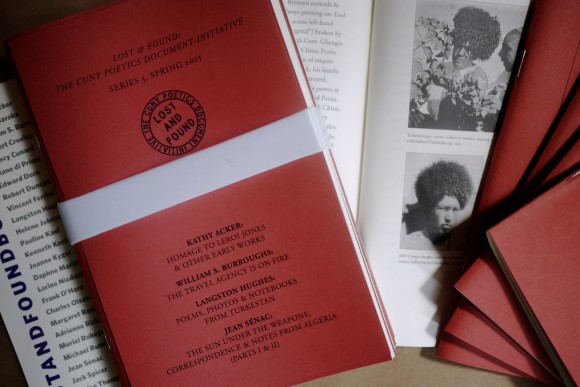
2022- Present: Faculty Editor, Lost & Found The CUNY Poetic Documents Initiative. The Center for Humanities at CUNY Graduate Center.

2024: Guest Poetry Editor, Pocket Samovar 3. Founding Editor, Konstantin Kulakov. International Literary Magazine dedicated to Post-Soviet writing and diaspora. https://www.pocketsamovar.com.

Spring 2023: Guest Poetry Editor, Turkoslavia Journal, vol. II. Editors Ena Selimović, Sabrina Jaszi, and Mirgul Kali. University of Iowa. https://www.turkoslavia.com/.

PEDAGOGICAL INITIATIVES:

Fall 2023 The Central Asia Futures Conference held on December 6, 2023, was a groundbreaking event at Macaulay Honors College, showcasing the creativity and innovation of Central Asian artists, writers, filmmakers, and cultural activists from the region and its diaspora. Organized by students from the “Survey of Central Asia Film and Literature” course, the conference aimed to bridge academia, community, and art to deepen understanding and foster cultural connections.

The event opened with a performance by Aigerim Myrzakhmet, founder of Dombra Academy Music, whose work as a musician and cultural ambassador set the tone for the day. Her dombra ensemble, uniting participants from across eight countries, exemplified the conference’s cross-cultural collaboration and inclusivity theme.

Panel discussions followed, featuring a diverse array of artists, curators, and scholars. The first panel, Central Asian Artists and Curators, highlighted eco-art activism, postcolonial studies, and digital identity. It featured prominent voices like Aigerim Kapar, whose initiatives blend art and environmental advocacy, and Faina Yunusova, whose work interrogates the fluidity of cultural identities. The American-based artist Farangiez Yusupova discussed her paintings, as did Gerald Sheffield, whose time in Uzbekistan created a wonderful conversation with local Uzbek artists. The interlude of Siberian music, curated by Theodore Levin, provided a reflective pause, connecting audiences to the region’s rich musical traditions.

Subsequent panels delved into Afghan diaspora poetry, contemporary Central Asian cinema, and the role of humor and satire in identity formation. The Afghan Diaspora Poetry session featured celebrated poets such as Aria Aber, Sahar Muradi, Hajar Hosseini, and Mina Zohal, whose works explore themes of displacement, resilience, and cultural memory. In the Contemporary Central Asian Films panel, filmmakers like Anisa Sabiri and Aiganym Mukhamejan shared their insights into using cinema and video art as a medium for exploring identity, and memory.

The conference concluded with a panel on Central Asian comedy and satire featuring comedian Natan Badalov, whose work humorously examines the immigrant experience, and a closing performance by Haleh Liza Gafori, an acclaimed translator and vocalist. Her recitation of Rumi’s poetry underscored Persian literary traditions’ timeless appeal.

The conference is in process of being turned into an anthology of Central Asia Futures soon. You can watch the recording here: Central Asia Futures, Macaulay Honors College Dec 6, 2023

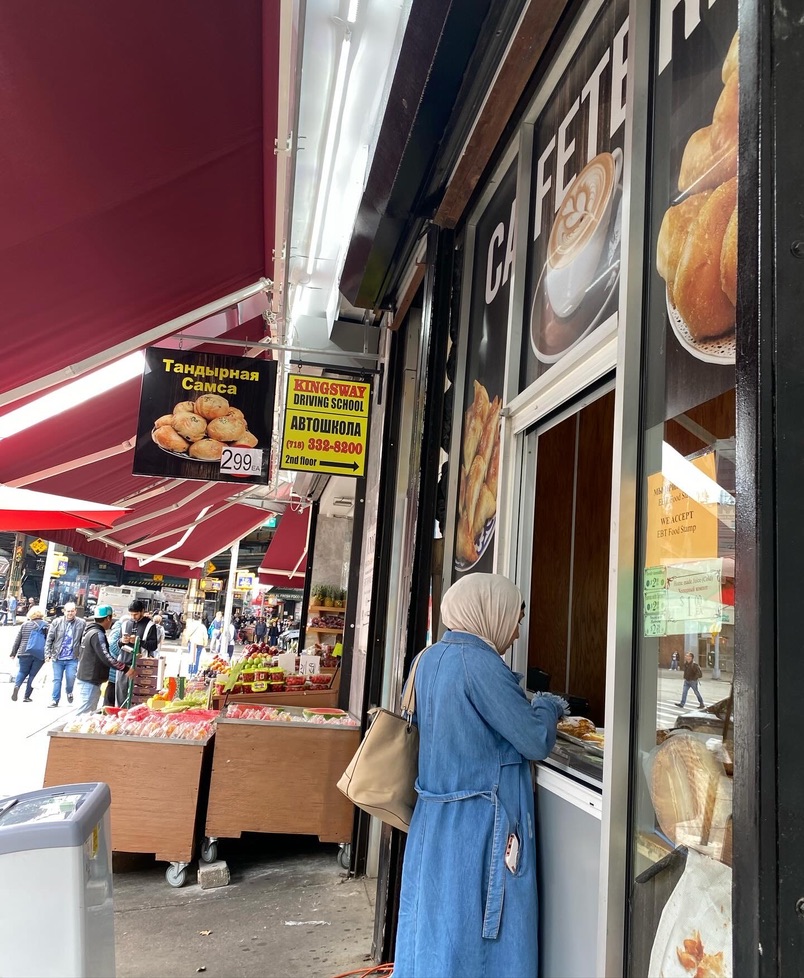
In Fall 2024, I taught “Central Asian Literature and Film” at Macaulay Honors College, implementing a hands-on, community-engaged pedagogical approach. A key component of this course was a collaborative project in which students created an interactive map of Central Asian restaurants and businesses in South Brooklyn.

Class Link to the Collaborative Map and Launch of the Central Asian Restaurants and Businesses in South Brooklyn.

This project involved several stages:

  • Research and Fieldwork: Students conducted on-the-ground research, visiting local establishments, interviewing owners and patrons, and gathering data on the cultural and economic contributions of these businesses.
  • Digital Mapping: Utilizing digital tools, students compiled their findings into an interactive map, integrating multimedia elements such as photographs, interviews, and narratives to provide a rich, user-friendly resource for the community.
  • Community Engagement: The project culminated in a launch festival on December 13, 2024, at Macaulay Honors College, featuring presentations by students and guest speakers, including chefs, poets, translators, and human rights defenders.

This experiential learning project exemplifies my commitment to integrating community engagement, digital literacy, and interdisciplinary research into the curriculum. I aim to foster a deeper understanding of cultural diversity and the socio-economic dynamics of urban neighborhoods by involving students in real-world projects that intersect with local immigrant communities. Furthermore, this approach enhances students’ research, critical thinking, and digital communication skills, preparing them for future academic and professional endeavors. This project’s success reflects experiential learning’s effectiveness in promoting student engagement and producing meaningful, community-oriented scholarship.

In Spring 2024, I taught “Food Identity and Politics: Food Power and Resistance in America,” focusing on food as a way to resist and question power hierarchies and to preserve and transform identity. The course used scholarly articles, book excerpts, cookbooks, interviews, and visits to neighborhood restaurants to collect stories of people who use food to challenge power, create or recreate identity, and as a form of resistance. Students were trained to conduct primary source research in archives, visit neighborhoods, and conduct or utilize oral history interviews.

Classroom Community: Neighborhood and restaurant trips were planned collaboratively, allowing students to propose neighborhoods and restaurants. These visits enabled students to meet and speak with restaurant owners, chefs, and workers. The class culminated in a public-facing final conference where students presented their findings.

Assignment: Food Identity and Community Project

Three-Part Project:

Neighborhood Visit Report: A 500-750 word report with photographs documenting a local neighborhood visit.

Food History/Preparation: Research or prepare a dish central to the chosen neighborhood, analyzing its significance and history.

Final Collaborative Presentation: A 15-20 minute group presentation exploring the history and socio-cultural aspects of the neighborhood and its food. This ended up being a class community project to host a picnic for an Afghan migrant family.

Afghan Family Picnic

On May 17, 2024, our class hosted an Afghan Family Picnic in support of the S family, newly arrived migrants to New York City. The event combined efforts from Afghans for a Better Tomorrow, students from “Food, Identity, and Power in America,” and UpSet Press.

Key Contributions:

  • Food Donations: Canned goods and halal meat supplemented by Costco deliveries.
  • Meals: Traditional dishes like kebabs and tandoori chicken were prepared by students, and traditional Afghan food was contributed by Afghan Grill in New Hyde Park.
  • Fundraising: Over $1,100 raised to support the family.
  • Community Support: Donations of clothing, books, and hygiene items.

This event embodied community engagement, reflecting the cultural significance of food and collective action to create meaningful support networks.

Student Reflections:

“This class was unlike any other I have taken. Supporting the S family and seeing our efforts come to fruition was deeply impactful.”

“I was pleasantly surprised by the number of donations and how quickly we surpassed our goals. Meeting the S family and seeing their joy was a humbling and rewarding experience.”

“The picnic allowed us to combine what we learned in class with real-world action, creating a supportive environment for a family in need while deepening our own understanding of resilience and community.”

“Working together to make the picnic a success was empowering. The stories shared by the family and our classmates will stay with me as a reminder of the power of collective efforts.”

“It was truly rewarding to connect with the S family, especially hearing the children’s dreams and aspirations. This experience brought to life the themes of food, identity, and resistance we explored throughout the semester.”

These reflections highlight the project’s transformative impact, emphasizing how collaborative efforts and hands-on experiences can deepen learning and create meaningful change.

JEHN: Justice and Equity in the Honors Network

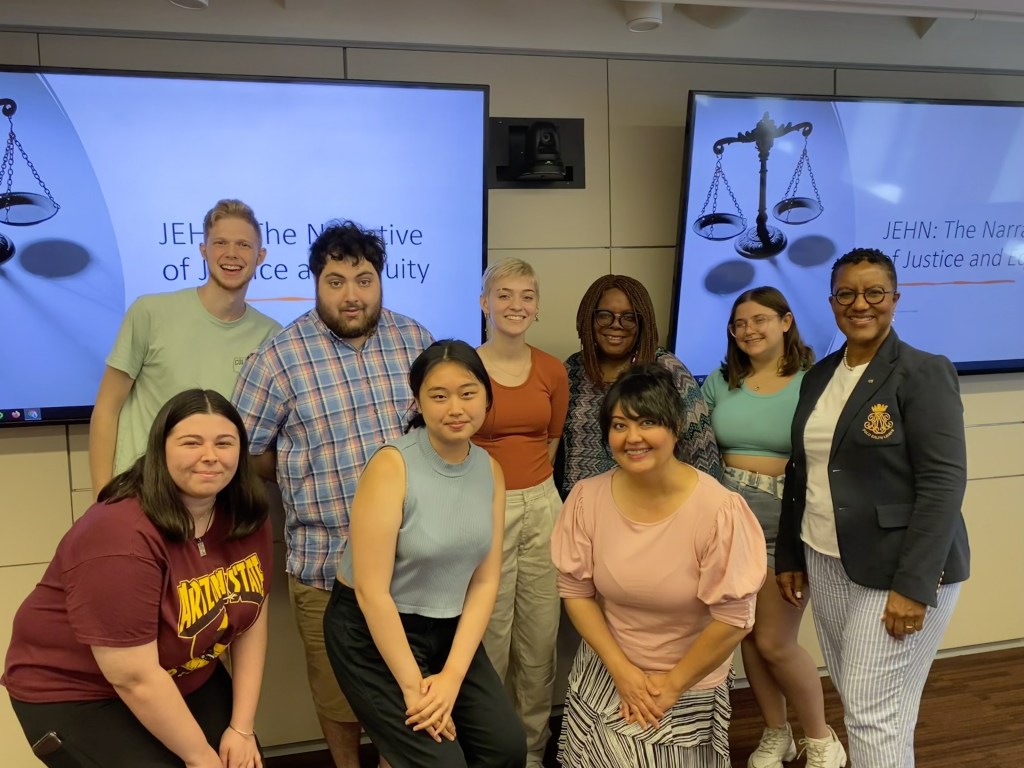
From Fall 2021 to Spring 2022, I co-taught JEHN with Dr. Rachel Fedock from Arizona State University, and from Fall 2022 to Spring 2023, I collaborated with Barrett Honors College at ASU. The Online Synthesis Sessions (OSS) formed the intellectual and social core of the JEHN community, fostering discussions on oppression, resistance, and justice, culminating in presentations at the Summer Gathering.

Sample Readings from JEHN Courses:

  • Isabel Wilkerson’s Caste (core text for foundational discussions on systemic oppression).
  • Audre Lorde’s “The Master’s Tools Will Never Dismantle the Master’s House.”
  • James Baldwin’s “Being White and Other Lies” and The Fire Next Time.
  • bell hooks’ Feminism is for Everybody (selections).
  • Angela Davis’ Freedom is a Constant Struggle (selections).
  • Kimberlé Crenshaw’s lecture on Intersectionality.
  • Arundhati Roy’s “Listening to Grasshoppers.”
  • Malcolm X’s “The Ballot or the Bullet” (audio).
  • Saidiya Hartman’s “Speculative History.”
  • Sylviane Diouf’s “African Muslims in Bondage: Realities, Memories, and Legacies.”
  • Aleia Brown’s “Quilting: An Archive of Hand, Eye, and Soul.”
  • Grace Lee Boggs’ insights on transformative justice and activism (American Revolutionary documentary and writings).
  • I Am Not Your Negro (film based on James Baldwin’s unfinished manuscript).

Summer 2023 Schedule Highlights:

  • Day 1: Orientation, check-in, and welcome dinner at Sakina Halal Grill, a restaurant founded on generosity as its core principal.
  • Day 2: Guest speaker Daphne Titus and a tour of the Molina Family Gallery.
  • Day 3: Guest speaker Curtis Valentine and a visit to the National Museum of African American History and Culture.
  • Day 4: Guest speaker Steve Brigham and a theater visit to see Radio Golf.
  • Day 5: Final presentations followed by a celebratory dinner at Ethiopic Restaurant.

Program Enhancements:

During the summer, JEHN also funded students’ stay in Washington, D.C., allowing them a week to explore the city, engage in unstructured learning, and build connections as emerging young leaders. This opportunity encouraged students to bond outside formal sessions, fostering camaraderie and shared purpose as they navigated leadership and equity challenges together.

Throughout the year, JEHN’s online synthesis sessions and year-long classes helped students cultivate deep intellectual and personal connections. Grace Lee Boggs’ work on community-driven change played a significant role in shaping class discussions, guiding students in envisioning transformative justice and the power of local activism. These relationships, strengthened by shared discussions and collaborative projects, became a foundation for long-term engagement in justice and equity work.

Impact:

The JEHN program inspires students to connect personal commitments to societal goals of justice and equity, fostering empowerment and collaboration to create a more inclusive world. The program’s structure, integrating rigorous academic discourse, real-world problem solving, and vibrant community-building experiences, ensures that participants are well-equipped to enact meaningful change in their communities and beyond.

Leave a comment