Archives for category: Zohra Saed Projects

Writers are for the most part lone wolfs, notorious for hibernating in order to release the “jinns” inside them via writing. However, this year, I found myself more than ever involved in collaborations that expanded my community of Asian American and Central Asian American authors, performers and intellectuals. Since I was bedazzled by the Hipstamatic App on my iPhone, I fortunately documented these moments of collaborations, both formal and informal (almost always informal with a generous dosage of laughter). I am blessed and honored to be part of this community.

Here is my tribute to a growing community:

The inimitable Cihan Kaan, author of Halal Pork & Other Stories whose book happily almost sold out 9 months after release (UpSet Press: Spring 2011)

Amir Parsa, genius poet, and Robert Booras, editor of UpSet Press drawing up a contract for 2013 and beyond with a cool $20 on the table.

Purvi Shah, director of KAVAD programs, Kundiman. Fearless leader of the Together We Are New York, a Post 9/11 Community Voices and Poetry Series.

These photos are a series of collaborative meetings poets: Hossannah Asuncion, Tamiko Beyer, Marlon Esguerra, April Naoko Heck, Eugenia Leigh, Bushra Rehman, Zohra Saed, Purvi Shah, and R.A. Villanueva had while putting together the Together We Are New York performance in NYC.

April Naoko Heck, poet/beauty/blogger

Tamiko Beyer, poet with the most joyous laughter, Together We Are New York (Kundiman)

Bushra Rehman, comedian meets poet meets novelist, Together We Are New York (Kundiman)

Marlon Esguerra, poet extraordinare, listening and editing the voices for Together We Are New York (Kundiman)

Hossannah Asuncion, poet and human vitamin C, bringing the good cheer at a Together We Are New York meeting.

R.A. Villanueva and Tamiko Beyer in the midst of editing at Together We Are New York meeting (Fast editing creates visual blurs -- aka Poets at Work defy still photos).

Eugenia Leigh, pushcart winner for her poetry! Here gathering the yellow candles we decorated the stage with at Fordham University.

My perspective... don

Nisa, the young future scientist interviewed by Tamiko Beyer. Tamiko

Sahar Muradi, poet/actress/co-editor, during a session to organize the first Afghan American artists and writers commemoration of the 10 years of war in Afghanistan.

Wazhmah Osman, Filmmaker/Scholar/Activist, at organization meeting for Afghan Americans Ten Years Later event.

Afghan American Artists and Writers Association (AAAWA) L-R: Sahar Muradi, moi, Naheed Elyasi, and Najila Naderi. The organization is now growing with members and events.

Bushra Aryan, PhD in Education, writes excellent probing work on Afghan American women in higher education.

Shehnaz Khan, community activist and author of

Veil matches iPhone. Madonna meets Hijabi Fashionista.

Shehnaz Khan, truly rocking that veil!

Winter Wonderland with Najila Naderi, Afghan American fiction writer.

Here is my pictorial formula to further increase my writing productivity 2012:

Some people see Jesus shapes on frosted windows -- I see the Buddha of Bamiyan on a tree in Midwood, Brooklyn.

+

Ezra Pound

+

My Turbano Totem: Found in a Chinatown Souvenir Shop on Doyer Street.

+

A Smiley Zohra

=

Wish me luck for the New Year! And thank you for all of your support! Happy writing, performing, creating and reading to you as well!

Guava Zine from 1997-1999 Printed at Brooklyn College

I’m packing up these beauties to take over to the Brooklyn College Library Zine Collections Archive. Earlier this week Alycia Sellie from the library contacted Robert Booras and I about submitting our zines. Although, at first I thought I had lost my old zines in my move — I was ecstatic after finding this humble three volume zine in my special box of lovely things. Thumbing through the paper, now softened a little with time, I remembered the women-power it required to get these zines filled with talented writers, edited and distributed. In the early clumsy days of email and some strange looking websites put together by Computer Science majors, Guava had managed to get the zine read in Singapore and studied in a class in Senegal. The first edition was put together by hand and that is my nascent artistic hand that illustrated the cover. For the most part we used Elmer’s Rubber Cement to decorate the articles with images of female-power.  We ended up getting grants to have the 2nd and 3rd volumes designed by a graphic designer and printed in color. The list of contributors includes: Annemarie Jacir, Sharbari Ahmed, Lisa Suheir Majaj, Suheir Hammad, Hayan Charara, Pauline Kaldas, Bruna Mori, Aileen Cho and my dear friend Sabrina Margarita Alcantara (Bamboo Girl) the list goes on. The Editorial Board comprised of: Danielle Elliott, Habiba Ibrahim and Simone Williamson. What a beautiful college experience to have worked with these women, read together and perform our work in the safety of sisterhood.

We even had Women of Color Clip Art!

SPAWN Zine by Robert Booras added more to the line up of future star poets and writers. What a great marker in time to have these print ephemerals and to have the opportunity to have them archived. This also marks the 11th year anniversary of UpSet Press and a friendship that happily endured and evolved to birth more collaborations, communities and celebrations around the mystical mythics of words.

Here is the lovely write up on the CUNY Commons site by Alycia:

Full Circle: UpSet Press and Alumni Zinesters!

One Story, Thirty Stories: An Anthology of Contemporary Afghan American writers
EDITED BY Zohra Saed AND Sahar Muradi
(The University of Arkansas Press, 2010)

A remarkable stand-out anthology offering poetry, fiction, essays and selections from the blogs of photographers Masood Kamandy and Gazelle Samizay. Editors Zohra Saed and Sahar Muradi state in their introduction, “This collection reveals what it is that makes the Afghan American experience particular and distinct, what sets it apart.” Among the authors’ topics are Displacement, Identity and Self-Making, Post-911, Women’s Voices, and War. Also included is a Chronology of Afghan American History. Fifty enlightening works of human experience and art.

— Sally Molini
Cerise Press: A Journal of Literature, Arts and Culture
Summer 2011 Editors’ Favorites
Thank you Cerise Press for your support!

And one more lovely interview about One Story, Thirty Stories: An Anthology of Contemporary Afghan American Literature. Thank you Leonard Schwartz who asked such great questions.

Cross Cultural Poetics (Seattle, WA)

Afghan American Writing: “One Story, Thirty Stories”

If you think of Afghan American literature, chances are good that Khaled Hosseini’s bestselling novels “The Kite Runner” and “A Thousand Splendid Suns” will come to mind.

And your associations might not go much beyond that. Afghan American writing has been growing in depth and richness, though, a fact proven by a new book, “One Story, Thirty Stories.”

It’s an anthology from the University of Arkansas Press that collects pieces of poetry, fiction, essay and, yes, blogging, by contemporary Afghan American writers.

Zohra Saed and Sahar Muradi both left Afghanistan when they were young. Muradi’s family moved to the US when she was three, Saed’s left Afghanistan when she was one, moving first to Saudi Arabia and then to the Sheepshead Bay neighborhood in Brooklyn, NY.

So for both of them, their early impressions of Afghanistan came from their parents’ stories. Muradi’s father would tell her legends from the country’s past, or stories about working in his father’s knitting factory in Kabul.

Saed’s father would illustrate his stories with photographs and post cards he’d brought with him from Afghanistan.

A Responsibility to Share

These images were a counterpoint to the Afghanistan Saed saw elsewhere.

“For me it was trying to compare these post cards of movie theaters and hotels and a city that didn’t match with the rugged mountain images that I was seeing in the 80s on the evening news with Dan Rather going into the mountains and hanging out with the Mujahadeen,” Saed said.

She said that a lot of the writing in the collection comes from an impulse to provide a sort of counterpoint, particularly after 9-11 and the US invasion of Afghanistan.

Saed said that Afghan-Americans felt a responsibility to share what they knew.

“What kind of answers do we present, when there are so many questions directed at us about Afghanistan; about being Afghan-American?” Saed said. “About living here. Because we were being held accountable for our identities, I think that is when we started answering, and in that answering came a lot of this writing.”

The anthology’s contributors include professional writers, musicians, filmmakers, academics, former ambassadors and doctors. Much of the work deals with how families are stretched and strained by the process of relocating to the US.

Zohra Saed’s poem “Neptune Avenue” speaks of her childhood gang of siblings and cousins in Brooklyn who find their own strangeness both alienating, and exhilarating:

We’d rather stretch our weekends and wrap it across the belly of the year. We’d rather dangle out every day on the fire escapes of the second-floor mosque, spill the Khutba onto the sweating concrete by opening the windows wide. Then jump onto the sidewalk, align our velvet prayer mats next to parked cars and play Imam and Ummah as passerbys gawk at the magic of our ‘flying carpets’ and at one five-year-old brother serious faced, hand over ear, singing out the call to prayer with a sugar-sweet throat.

War “Back Home”

And, of course, war is a constant presence in the collection. It’s the reason families flee Afghanistan, it’s why many are now traveling back there to do humanitarian work.

A poem by Sahar Muradi called, “Of My Mother,” tackles the loss of homeland. In this passage, her family is leaving Afghanistan on a bus bound for Pakistan:

I think of my little bag, my khalta-gac, the pillowcase that I keep all my treasures in — apple seeds and lost buttons and little webs of lint. Your mother said she will keep it safe, for when we come back from the trip, with new treasures. But you, you have so many more things that we do, so your missing is so much bigger. It takes up all the room on our seat. It splits the vinyl, fogs the windows, and spreads to either end of the bus. It’s already hard to be comfortable with the rocks under the tires and the dust in our eyes and our lips sealed tight around the cane, but now your missing is coming off your face like steam, and none of us can breathe.

Zohra Saed said that war has given many of the writers in the anthology a sense of guilt and obligation to succeed because so many of their relatives weren’t as fortunate as they were. She said that it also affects the style of the writing.

“War, you know, of course affects narrative — how we write, the bits and pieces, the fragmented way that some of the writers are writing here is about the fragmented way we’ve grown up,” Saed said.

Regular Life

For all its heaviness, the collection does have plenty of moments of wit and happiness.

For Sahar Muradi, one of the joys of poring through all the work was finding other writers talking about bits of everyday life that were so familiar to her.

“I was just so thrilled to read things that resonated with me — of course all great literature does — but there’s something really profound about reading a story about a mother who goes to 99 cent store and buys the Brucci lipstick for her daughter, and gives them home perms, and all these things that were so particular to my childhood as well,” Muradi said.

In fact it’s the everyday rituals like this — lipstick and home perms and playing with siblings in the street — that seem to make the harder stuff here bearable.

[Audio Available in the Links Below]

PRI’s The World: Afghan American Writing “One Story, Thirty Stories”

Bruce Wallace, Feb 4, 2011

____________________________

South Asian Journalist Association (SAJA) Forum

One Story, Thirty Stories: Afghan American Anthology

Sree Sreenivasan, Jan. 14, 2011

_____________________________

Levantine Center Review: New Afghan American Anthology Brings Kabul Closer

Sholeh Wolpe, Jan. 4, 2011

_____________________________

Book Dragon (Smithsonian Asian Pacific American Program): One Story Thirty Stories an Anthology of Contemporary Afghan American Literature

Terry Hong, Dec. 27, 2010

_____________________________

University of Arkansas News Wire: University of Arkansas Press Publishes Anthology of Afghan American Literature

Nov. 18, 2010

_____________________________

America.gov: In a New York Cafe, a Place for New Persian Poetry

Jeff Baron, Nov. 17, 2010

_____________________________

Gulf News: Afghan American Authors Raise Awareness

Mariam M. Al Serkal, Nov. 5, 2010

_____________________________

Jaihoon.com: Launch of One Story, Thirty Stories at Sharjah International Book Fair

Nov. 3, 2010

_____________________________

Lisa Dempster’s Blog: One Story, Thirty Stories (Launched by Lisa Dempster)

Nov. 2, 2010

_____________________________

Dubai Eye: One Story, Thirty Stories with Zohra Saed and Sahar Muradi

Oct. 31, 2010

Yesterday, Sahar and I did an interview on SAJA Webcast. Ariana Delawari and Sedika Mojadidi joined and shared their powerful work. Listen HERE

One Story, Thirty Stories: An Anthology of Contemporary Afghan American Literature
Meet the editors and two of the writers
Friday, Jan. 14, 2011
1-2 pm NY time
10:30-11:30 pm Kabul time

Thanks to Sree Sreenivasan for setting this up on the SAJA: South Asian Journalist Association blogradio.

One Dec. 19, 2010, Zora, owner of the lovely Zora Space in Park Slope, Brooklyn generously hosted the celebration of our book.

The cafe was packed with friends, family, long lost friends, colleagues, mentors and babies!

Here are some images from the event:

Sahar Muradi welcomes the audience.


Mariam Ghani reads "Notes on the Disappeared" image from her work projected behind her.

Donia Gobar reads "Aya" with an image of her graduation from Medical School in Kabul.

Donia Gobar reads and behind her a photo of herself in the 1960s with her sculpture.

Weis Sherdel read the poetry of Qais Arsala. Behind him are childhood photos of Qais and his brother in Kabul.


One corner of the audience. The other side went all the way to the door.

Zohra Saed, Mariam Ghani, Donia Gobar, Sahar Muradi, Weis Sherdel. Photo of Farhad Ahad (1970-2003) behind us from his days at Lycee Amani in Kabul.

Time to hit Brooklyn with a strong dose of Afghan American literature!

Please join:

Jessamyn Ansary
Naheed Elyasi
Mariam Ghani
Donia Gobar
Khalida Sethi
Sahar Muradi
Zohra Saed

Book Launch at Zora Space
5:30-7pm

Sunday Dec. 19th

315 4th Avenue
NY 11215
Get Directions

(718) 832-4870

One Story, Thirty Stories:

An Anthology of Contemporary Afghan American Literature

Edited by Zohra Saed and Sahar Muradi

The most comprehensive collection available of Afghan American writers

One Story, Thirty Stories is exquisite documentary, a kaleidoscope of fragmented lives, losses, and attempts at re-making. The editors have assembled a collection that manages to be both literature and history, both heartbreaking and hopeful, both educational and lyrical. From the daughter of a cab driver to the daughter of an imam, from a crack dealer to a standup comic to an ambassador, the writers in this book offer not only poignant testimony but also form a who’s who of Afghans in the United States. An invaluable, accessible resource for anyone who cares about what America is doing in, and to, Afghanistan.”
—Minal Hajratwala, author of Leaving India: My Family’s Journey from Five Villages to Five Continents

“From a society shredded by violence and a generation caught between Afghanistan and America, Saed and Muradi have sewn together a vibrant patchwork of memory and imagination. At turns raw and affecting, One Story, Thirty Stories is a chronicle of loss and reunion, offering a firsthand look at how communities are fractured and remade, with all the frustration and tenderness that exile evokes.”
—Tara Bahrampour, author of To See and See Again: A Life in Iran and America

“An admirable achievement. . . . This is a literature haunted by catastrophe. . . . [These] writers . . . are taking that crucial first step toward absorbing the unique experience of Afghan Americans into the universal themes that inform human experience as a whole.”
—From the Foreword by Tamim Ansary, author of West of Kabul, East of New York and The Widow’s Husband


Hakeem Khan, from Jalalabad

Uncle Hakeem circa early 1970s: Jalalabad, Afghanistan

Searching for Hakeem Khan, son of Na’eem Khan, Sar Mamoor (deputy Police Commissioner) of Jalalabad City in the 1960s, later Sar Mamoor of Charikar, then in the 1970s Commandant (Police Commissioner) of Kabul 1970s.

Childhood friend of father.  Graduated Kabul University.  Loved literature (like me).  Last heard when father was in Riyadh (1979, after the Soviets had invaded).  A letter sent from Uncle Hakeem asking to be brought to Saudi, if possible.  But there were no lenient immigration laws in Saudi.  Even we had to leave, find a place that accepted us.  Father found his way to Brooklyn . . . two children strapped to his back and a reluctant wife.

Hakeem Khan, Uncle Hakeem, if out there then contact us.  You are missed.  From childhood your stories have been kept alive.  Misadventures of boyhood.  Even my love of literature accepted because of your memory.

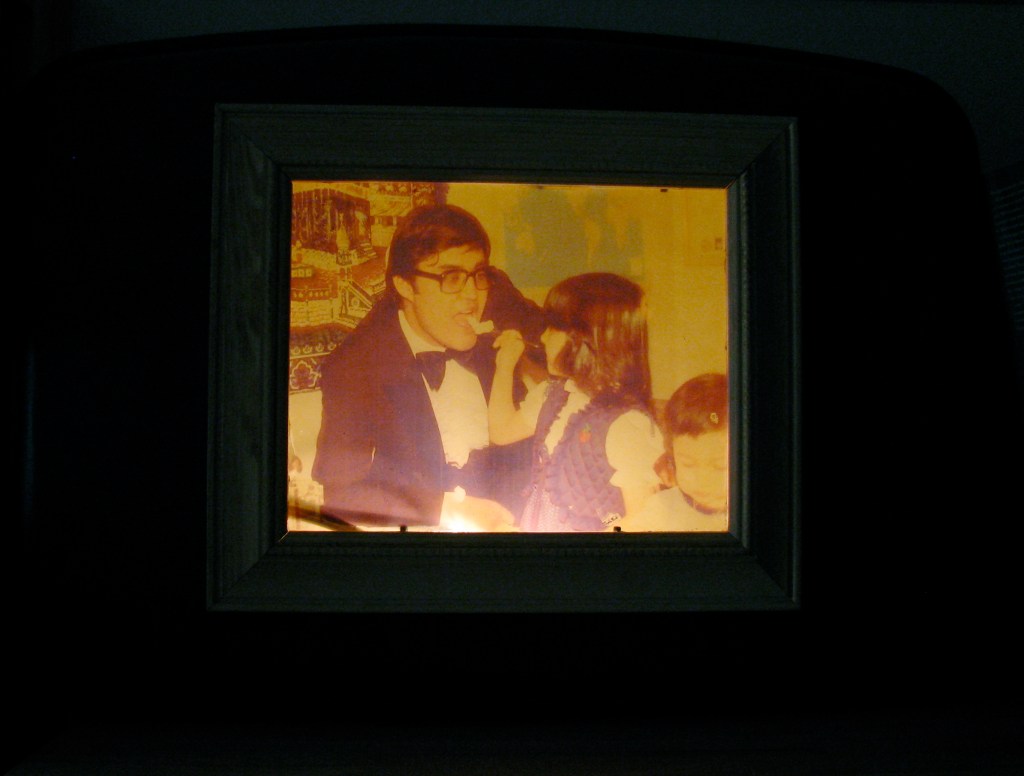
Uncle Hakeem, if out there, contact us.  This is the only photo preserved carefully by father, along with a stamp of Daoud Khan and a celebration of the boodana birds (the fighting partridges) on a stamp.

Searching for Uncle Hakeem . . .

09-04-09 Afghanistan 154The event at Asian American/Asian Research Institute was wonderful.  Thanks to Joyce Moy, Director of AAARI, and Antony Wong, Program Coordinator for making this happen.  The video of the event is available on the website: www.aaari.net Here is a recap of the event with some photos by Antony Wong.

09-04-09-afghanistan-023

Bina Sarkar, Editor holding an issue 23 of the magazine.

09-04-09-afghanistan-042

Pre-event chats.

09-04-09-afghanistan-079

Joyce Moy, Director of AAARI, welcomes the audience.

09-04-09 Afghanistan 142

Prof. Ishaq Nadiri and me

09-04-09-afghanistan-098

The audience

09-04-09-afghanistan-186

Zolay speaking to Jawied Nawabi (speaker at next Afghanistan Event April 28th-29th at Queens College) and Aniqa Islam.

2009 AFGHANISTAN PEACE AND DEVELOPMENT CONFERENCE

Innovative Recommendations of Conflict Resolution and Development for Post-War Afghanistan: An Exchange of Intellectual Dialogue through Public Discourse

Host:
Queens College
Type:
Network:
Global
Start Time:
Monday, April 27, 2009 at 6:00pm
End Time:
Tuesday, April 28, 2009 at 5:00pm
Location:
Queens College, STUDENT UNION BALLROOM
Street:
65-30 Kissena Blvd.
City/Town:
Flushing, NY
Email:
Follow

Get every new post delivered to your Inbox.

Join 624 other followers